Notes on knowledge, power and learning across the Global South
I went to China carrying a question. I had imagined asking people I met from across the Global South: What wisdom would your country contribute to the Global South? It was intended to be one of the threads running through my journey, a way of listening across countries and experiences that I might otherwise know only through maps, headlines, institutions and someone else’s interpretation.
Those individual conversations did not unfold as I had planned, but the question never really left. Instead, China gave me another kind of conversation. It happened in classrooms, on buses, while walking through cities, while listening to lecturers explain China to us, while hearing participants speak about their own countries, and while watching technology, infrastructure and ordinary life move around me. It also happened in moments of discomfort, disagreement and reflection, when something that was said forced me to examine not only the speaker’s assumptions, but my own.
I went looking for voices. I came home thinking about who gets to speak, who gets to describe whom, and whose interpretation is treated as authoritative.
Who gets to describe whom?
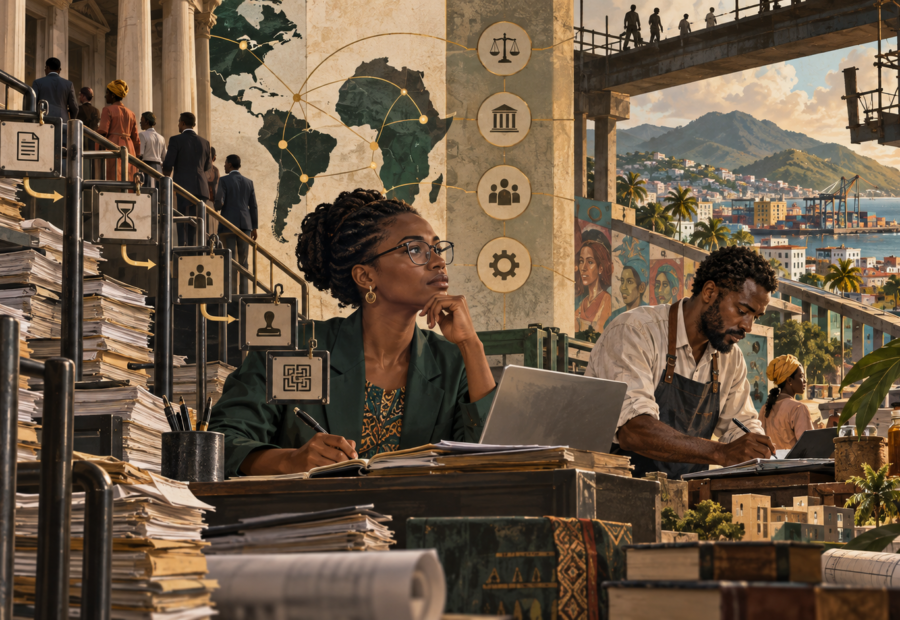
One of the most persistent questions I carried through the programme was about knowledge. Who gets to describe Africa? Who gets to explain development? Who decides which countries are advanced and which are behind? Who defines democracy, modernity, progress and legitimacy? Who tells the story of colonialism? And what happens when the people being described are sitting in the room listening to their histories being reduced, simplified or retold?
There was a moment during the programme when the language used in discussing Africans and slavery stopped me. The distinction between slaves and enslaved people may appear insignificant to some, but it is not insignificant to me. One word turns a condition imposed upon human beings into something that sounds like an identity. The other reminds us that something was done to them. Language carries history, and language carries power. When institutions teach history, the words they choose reveal something about how they understand the people inside that history.
That moment became part of a larger unease I sometimes experienced when Africa was discussed. A continent containing extraordinary civilisations, intellectual traditions, political systems, technologies, cultures and histories can still be flattened into a story beginning with poverty, slavery or colonialism. This is not uniquely Chinese. The West has done it for centuries, and we sometimes repeat those framings ourselves. But being in China reminded me that changing who occupies the centre of global power does not automatically change the habits through which knowledge is produced.
The Global South must not simply reproduce the hierarchy
This matters deeply to Sankofa because there is a temptation within conversations about the Global South to imagine that solidarity means agreement. I do not think it does. Nor do I think South–South cooperation should require romanticising one another.
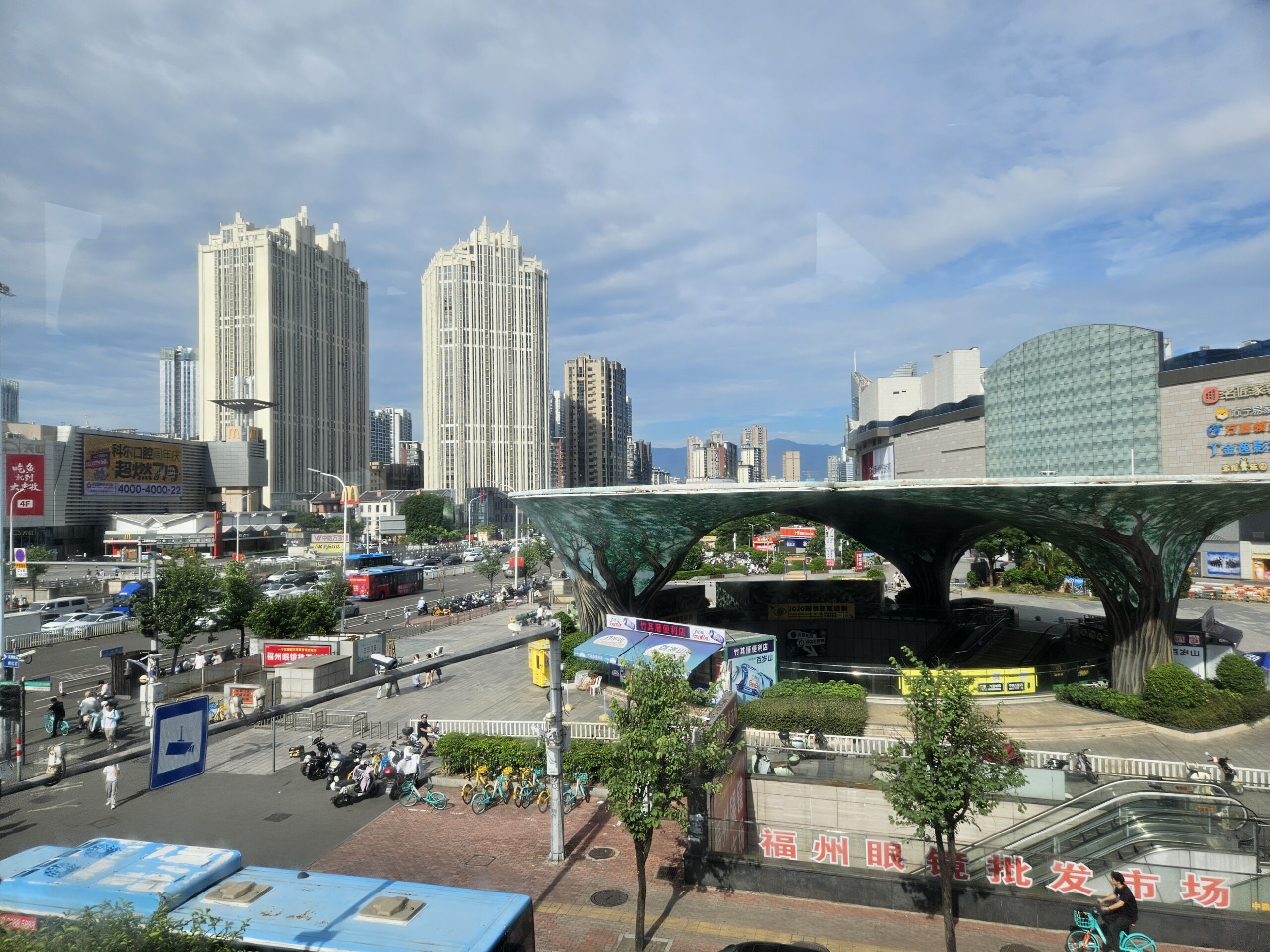
China’s transformation deserves serious attention. Its infrastructure is extraordinary in places. Its technological integration into everyday life can be startling to someone arriving from a small Caribbean island. Its ability to mobilise resources at enormous scale has changed what hundreds of millions of people can access and what the country itself can accomplish. There is much to study and much to learn.
But learning cannot require surrendering the right to question. During lectures, I heard claims about China’s relationship with the world, its history of war, its approach to other developing countries and its technological leadership that I sometimes wanted to interrogate further. Sometimes I did. That experience reminded me that partnership between countries of the Global South cannot simply mean replacing one unquestioned centre of authority with another.
If our relationships are genuinely different, they must permit disagreement. They must allow us to ask difficult questions of China, of Europe, of the United States, of Africa, of the Caribbean and of ourselves. Solidarity that cannot withstand scrutiny is too fragile to be meaningful.
We can admire without romanticising
Perhaps this is one of the most important things China reinforced for me: two things can be true at once.
I can be impressed by infrastructure and remain curious about the political structures that produced it. I can admire technological adoption while asking questions about power, access and surveillance. I can recognise China’s remarkable development while resisting the idea that there is only one legitimate pathway to development. I can appreciate China’s engagement with the Global South while still asking what power looks like when one partner is vastly larger, wealthier and more influential than another.
That capacity to hold admiration and interrogation together may be essential to meaningful Global South exchange. Too often, our international conversations demand allegiance. Choose a side. China or America. East or West. Democracy or development. Capitalism or socialism. Friend or threat.
But countries like Grenada live in a much more complicated world than those binaries allow. We have relationships with many powers. We carry histories shaped by colonialism and slavery. We are vulnerable to climate change we did little to cause. We require investment, markets, technology, education and international cooperation. Our interests will not always fit neatly inside somebody else’s geopolitical categories.
Perhaps wisdom for small states begins with refusing to let others do all of our thinking for us.
And what does Grenada know?
This brings me back to the question I originally wanted to ask everyone else: What wisdom would your country contribute to the Global South? At some point, I realised that I also needed to ask it of my own country.
What does Grenada know? What does the Caribbean know?
We are small, and that fact often enters international conversations as a limitation. Small economy. Small population. Small market. Small administration. Small state. But smallness produces knowledge too. Small states know something about living with limits. We know something about adaptation. We know what it means to watch the weather because the weather can alter the trajectory of an entire economy overnight. We know about migration and the strange reality of building nations whose people and families stretch across oceans.
We know something about improvisation and community, not always perfectly and not always romantically, but intimately. We know what happens when institutional relationships are personal because everyone is separated by only a few degrees. We know how to make limited resources travel remarkably far. We know something about surviving histories we did not choose.
Caribbean people also carry intellectual traditions, ecological knowledge, cultural memory and ways of understanding human relationships that deserve to enter global conversations as knowledge, not merely as folklore, tourism or cultural colour.
Scale produces knowledge. Smallness does too.
Sankofa was already happening
I thought Sankofa would happen primarily through recorded conversations. Some of those conversations never happened, and for a while I regarded that as unfinished business. Now I am not so sure.
Sankofa was happening anyway.
It happened when I questioned a word. It happened when something said about Africa made me uncomfortable. It happened when I looked at China’s infrastructure and wondered what lessons were transferable to Grenada and what lessons were not. It happened when I listened to participants from Suriname, Guyana, Kenya, Jordan, Azerbaijan, Moldova, Mongolia, Cuba, Barbados and elsewhere describe worlds I knew imperfectly. It happened whenever I noticed my own assumptions and whenever I resisted the temptation to decide too quickly what China meant.
That may be the deeper work of exchange. Not collecting quotations. Not accumulating countries. Not travelling somewhere and returning as an authority on it. But allowing encounter to disturb certainty.
Perhaps that is what meaningful travel and meaningful dialogue are supposed to do.
There is more than one direction from which wisdom can travel
Sankofa began with a simple conviction: the Global South has knowledge worth exchanging with itself. China strengthened that conviction, but it also complicated it.
South–South exchange will mean very little if knowledge always travels from the larger country to the smaller one, from the richer country to the poorer one, from the technologically advanced country to the developing one, or from the person holding the microphone to everyone expected to listen. Exchange requires reciprocity.
China has things to teach Grenada, and Grenada has things to teach China. Africa has things to teach the Caribbean, and the Caribbean has things to teach Africa. Sometimes what one country contributes will not be a solution. It may be a warning, a memory, a question or a different way of seeing. That counts as knowledge too.
I left home intending to ask people what wisdom their countries would contribute to the Global South. I did not collect all the answers I imagined I would. Instead, I returned with the question enlarged.
What might become possible if the Global South learned to encounter itself with curiosity rather than hierarchy? What might become possible if we listened without romanticising, questioned without dismissing, shared without assuming superiority, remembered our histories without allowing them to imprison our imaginations, and recognised that wisdom does not always arrive from the largest country, the richest institution or the loudest voice?
Sometimes it comes from a very small island. Sometimes from a conversation on a bus. Sometimes from a disagreement in a classroom. Sometimes from recognising that something you were told does not quite sit right.
And sometimes the most valuable thing we bring home from a journey is not an answer at all, but a better question.