Some journeys begin with a destination. This one began with a question: What might we learn if we listened more carefully to the wisdom already being lived around us?
My name is Carlana Charles-McGuire. I am a Grenadian consultant and writer whose work has long existed at the intersection of people, organisations, systems and stories.
Through Paperclip Limited, I work with businesses, public institutions and other organisations to understand how they function, where they become stuck and what must change for them to become stronger, more accountable and more sustainable.
That work often takes me beneath the visible problem. A struggling organisation may appear to need training when the deeper issue is weak governance. A team may seem resistant to change when people have repeatedly experienced decisions being made without them.
A system may look inefficient because its processes are poorly designed, but it may also be carrying the weight of history, hierarchy, culture and institutional memory.
The longer I have done this work, the more convinced I have become that systems cannot be understood apart from the people who live within them. People cannot be understood apart from the places, histories and experiences that have shaped them.
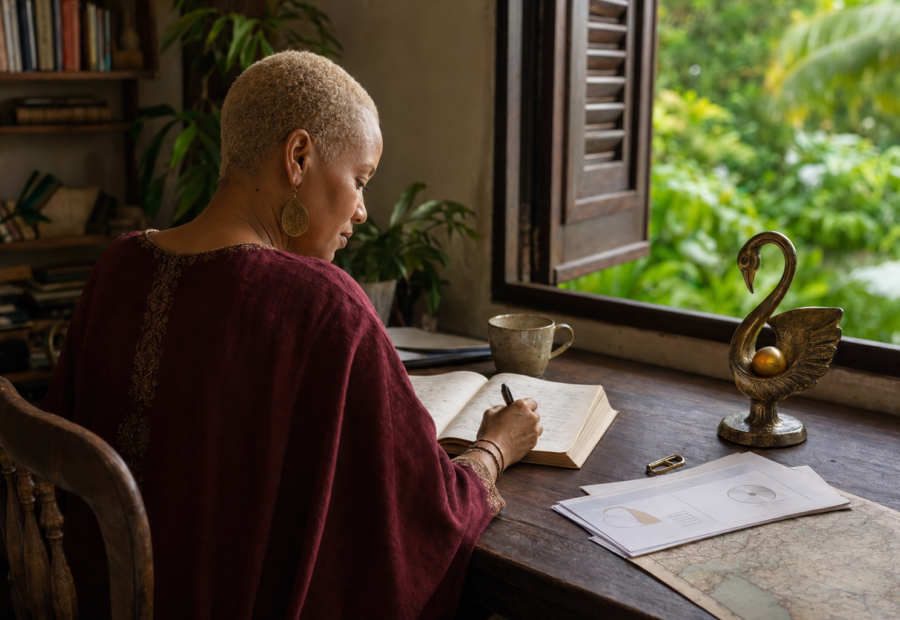
My writing comes from a similar instinct. I write to make meaning, notice what might otherwise pass unexamined and understand the connections between our personal experiences and the wider world.
Writing allows me to remain with a question longer than professional work sometimes permits. It creates room for memory, uncertainty, observation and the truths that do not fit neatly into a report or presentation.
Sankofa sits at the intersection of these parts of my life. It brings together my work as a consultant, my curiosity about how societies and institutions function and my belief in the power of stories to reveal what formal systems often overlook.
It creates space for conversations that may begin with governance, leadership, work or development but naturally move into questions of identity, belonging, culture, migration, memory and possibility.
The Wisdom Already Around Us
For years, my work has taken me into organisations, boardrooms, universities and communities. In each setting, I have encountered knowledge shaped by lived experience.
People understand how their communities survive difficult periods, how informal systems compensate for institutional gaps and how families, businesses and countries adapt when circumstances change.
This knowledge is not always written down or recorded in an academic journal, policy paper or international framework. Sometimes it is carried through stories, habits, relationships and ways of working that people have developed over generations.
Yet much of what we call expertise still travels in one direction. Countries and communities across the Global South are frequently positioned as places to be studied, advised, developed or corrected rather than as sources of knowledge in their own right.
We are encouraged to look outward for models and validation, even when the experiences closest to us contain insight that is equally valuable.
This does not mean that every inherited practice should be preserved or that local knowledge should be protected from examination. Sankofa is not about romanticising the past. It is about looking carefully enough to distinguish between what has held us back and what remains worth carrying forward.
Why Sankofa
The word Sankofa comes from the Akan people of Ghana. It is commonly understood as an invitation to go back and retrieve what is valuable.
The Sankofa bird looks backwards while moving forward, and that image holds the philosophy of this project. We do not return to the past to remain there. We return to understand what has shaped us, recover what may have been forgotten and carry useful wisdom into the future.
That principle matters far beyond personal memory. Organisations, communities and countries all carry histories. Those histories influence how people understand authority, respond to change, build trust and imagine what is possible.
If we ignore them, we risk importing solutions that do not fit the places in which they are expected to work. We may repeat old failures under new names or discard knowledge that could help us create something more grounded and humane.
More Than Travel
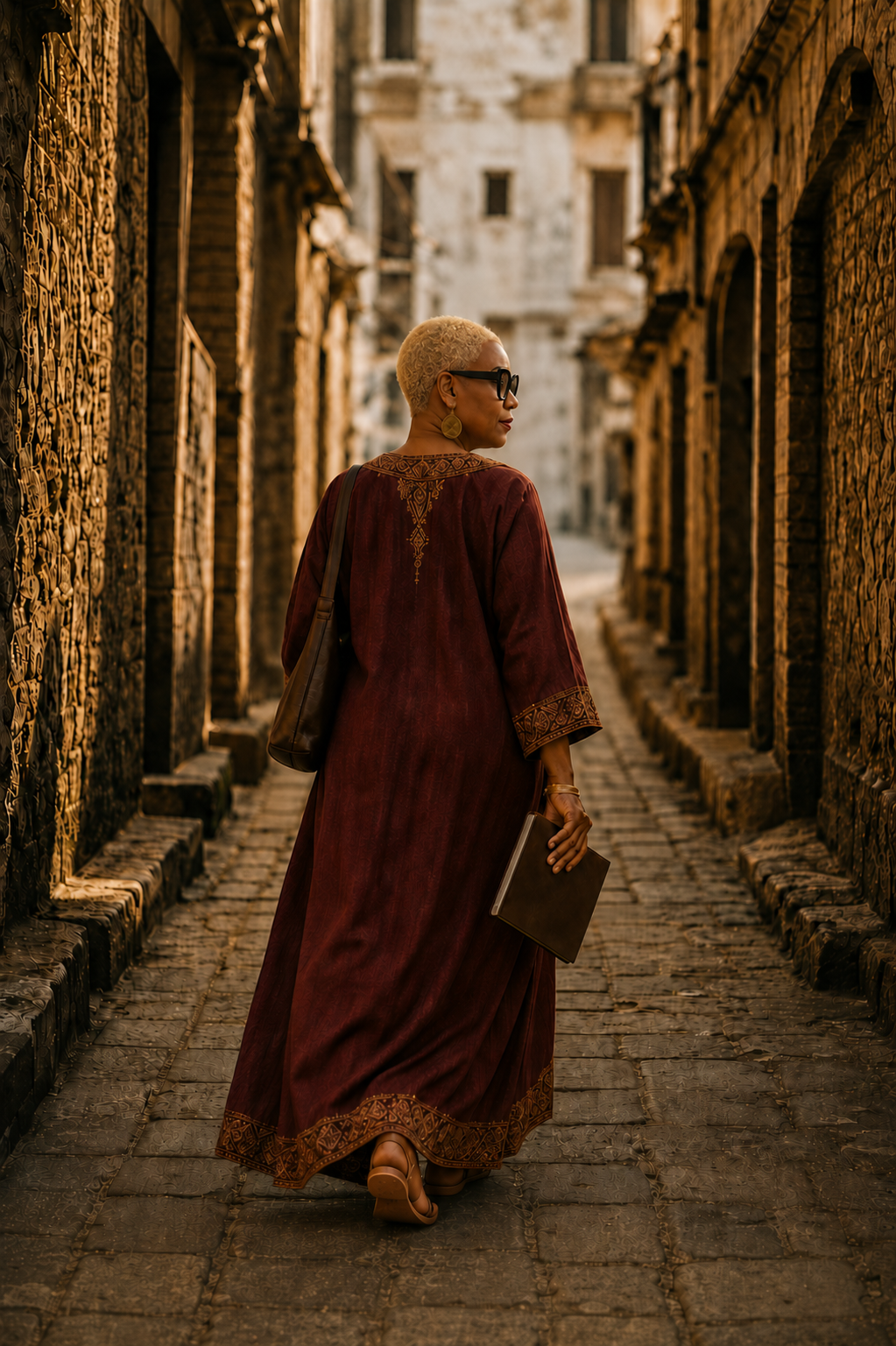
Sankofa will move across places, but it is not a travel blog. I am not interested in collecting countries or presenting polished accounts of destinations.
I am interested in what people know, what their experiences have taught them and how their societies are responding to the questions of our time.
Some conversations will be with leaders, researchers and practitioners. Others may be with artisans, workers, students, elders, entrepreneurs or people encountered unexpectedly along the way. The point is not status. The point is insight.
The journey begins in Grenada and reaches towards Africa, the Caribbean, Asia and the wider Global South. These regions are not identical, and Sankofa will not pretend that they are. Each contains different histories, cultures, contradictions and possibilities.
What connects them is not sameness, but the opportunity to learn from one another without assuming that wisdom must always arrive from somewhere else.
One question will travel with me:
What wisdom would your country contribute to the Global South?
I do not expect one answer. I hope the question opens many doors.
Carrying Something Forward
Sankofa will take shape through conversations, field notes, essays and the questions that emerge along the way. It will evolve as relationships deepen and new connections become possible.
I am beginning without pretending to know everything this project will become, and that uncertainty is part of its honesty. Curiosity must leave room for surprise.
What I know is that our world is carrying knowledge that deserves to be heard. Some of it is held in institutions, while some can be found in books and research. Much of it lives quietly in people, practices, memories and communities.
Sankofa is my way of paying attention.
This journey began with a question. I hope you will come along and help me discover where it leads.