
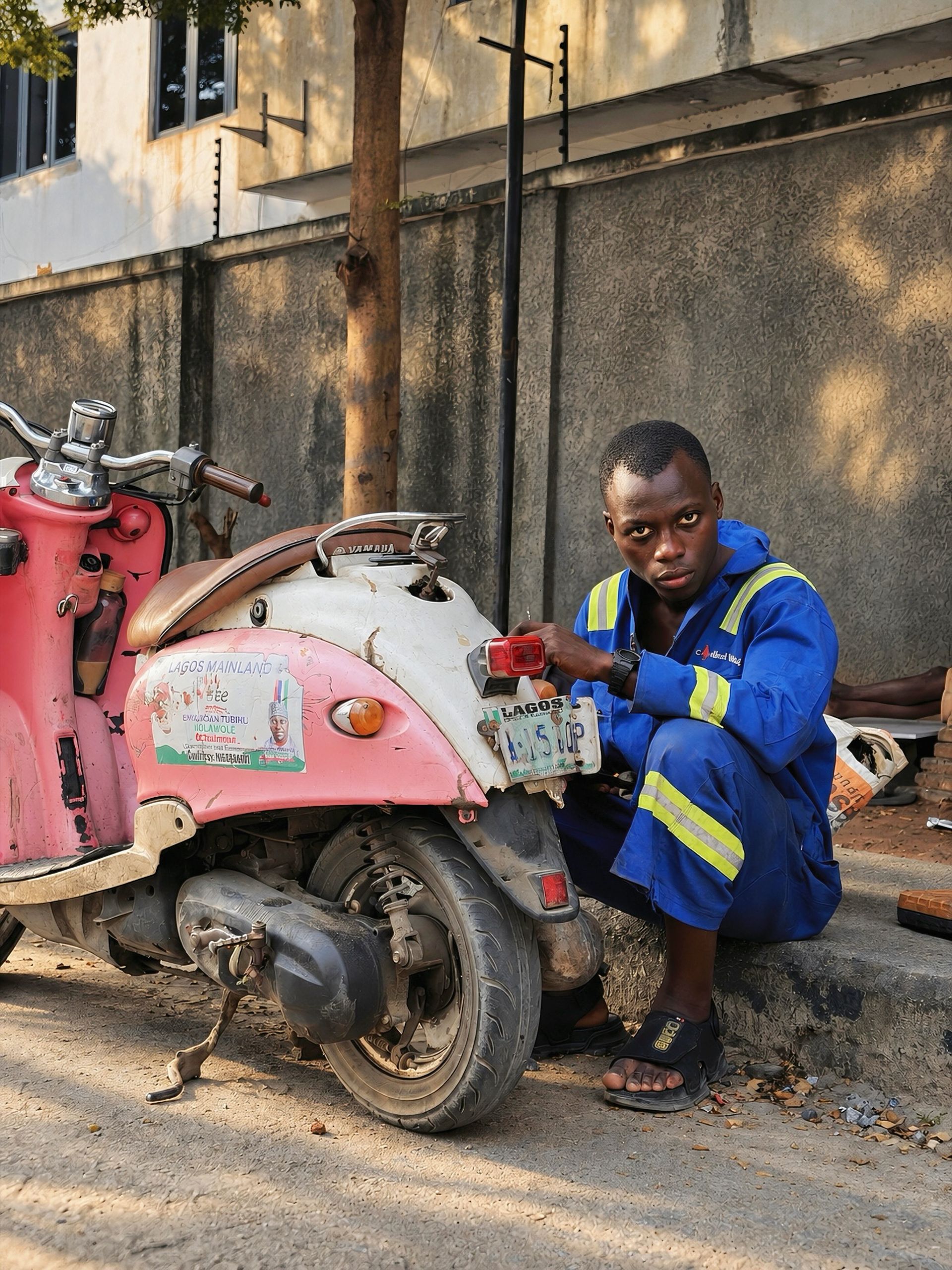
On craftsmanship, enduring value, and the things we create
Anyone who knows me knows how fascinated I am by scooters, particularly vintage and vintage-inspired ones. I love their design, their history, and the craftsmanship that goes into making and maintaining them. There is something about the lines of an old Vespa or Lambretta that I find irresistible. I am equally fascinated by the people who restore them, sometimes bringing machines that are more than sixty years old back to life.
Recently, I found myself watching videos of people restoring old scooters. Some had been abandoned in garages, left exposed to the elements, or acquired in such poor condition that restoring them seemed an extraordinary undertaking.
And yet, people do.
They spend months, sometimes years, taking these machines apart, sourcing components, repairing engines, treating rust, restoring paintwork and bringing them back to life. There is something deeply satisfying about watching a machine that has been silent for decades start again.
I have always appreciated a well-made object. There is a particular pleasure in encountering something thoughtfully designed, beautifully constructed and capable of doing what it was intended to do. But as I watched these restoration projects, I found myself thinking less about the scooters themselves and more about the people who had chosen to preserve them.
What makes someone invest so much time, money, skill and imagination in an object they did not create?
Certainly, nostalgia plays a part. So does an appreciation for design, mechanical ingenuity and the pleasure of working with one’s hands. But there is something else happening here that I find fascinating.
These machines have generated entire communities and economies around them.
There are mechanics who specialise in restoring particular models, suppliers who reproduce parts that manufacturers stopped making decades ago, collectors who preserve their histories, and enthusiasts who organise gatherings around their shared interest. Knowledge is exchanged and passed along. Skills are developed. Businesses emerge. Friendships form.
The original manufacturer may have sold the machine many decades ago, but the economic and cultural activity associated with it continues.
In some cases, the object has become more than a possession. It has become a point of connection, an expression of identity, and something people feel a responsibility to preserve.
Of course, we should be careful not to romanticise the past. Not everything made fifty years ago was better made, and many older machines are less efficient, reliable or safe than their modern equivalents. Their continued appeal cannot be explained by quality alone.
Perhaps what matters is the combination of usefulness, design, repairability, cultural meaning and the relationships people develop around them.
My fascination with scooters has also taken me in other directions.
During a visit to China, I became captivated by the extraordinary presence of scooters and electric two-wheelers in everyday life. They seemed to be everywhere, moving through crowded intersections, transporting people and goods, and making ordinary activities possible. I began paying attention to the people riding them and the many ways these small machines fitted into the rhythms of daily life.
Those observations inspired an article I called Follow the Scooter.
What interests me now is that my curiosity has continued beyond that original encounter. Watching old Italian scooters being restored has opened another set of questions, not simply about transportation, but about our relationships with the objects we make, use and preserve.
And somewhere in that thinking, I arrived at a question that has stayed with me:
What does it take to create something so worthwhile that people who had nothing to do with its original creation will devote their own resources, skills and imagination to keeping it alive?
I have been considering this not only as someone who appreciates craftsmanship, but also as a writer, creative person and business owner.
We spend so much time thinking about creating things people will buy, read, use or appreciate. We consider markets, audiences, demand, relevance and commercial viability. These are necessary considerations, particularly when we are trying to sustain a business or make a living from our work.
But perhaps there is another question worth asking alongside them.
What happens to the value of what we create after the original transaction, assignment or encounter is over?
Can an idea continue to influence how someone thinks? Can a piece of writing inspire another person to explore something they had not previously considered? Can a professional method become so useful that others adopt, adapt and improve upon it? Can a creative work become part of someone’s personal history, something they return to and eventually share with another generation?
I am increasingly interested in the possibility of creating work that does more than serve its immediate purpose.
There is a difference between producing something that people want to keep and creating something they want to keep alive.
The first may come from quality, beauty, usefulness or personal attachment. The second seems to require something more. It suggests that the work has become meaningful enough for others to contribute to its continued existence.
It may even take on forms its original creator never imagined.
That possibility is both exciting and humbling. We cannot decide in advance what will endure, nor can we manufacture genuine attachment simply by declaring something important. Much of what we create will serve a purpose for a time and then pass, as it should. There is no failure in that.
But I do think we can be more intentional about the standards we bring to our work and the kinds of value we hope it will create.
We can make things carefully. We can resist the temptation to confuse novelty with substance. We can create work that invites curiosity and participation rather than simply asking to be consumed. And we can recognise that sometimes the most valuable thing we produce is not the object itself, but what it enables other people to do.
I find myself returning to this thought as I consider the different expressions of my professional and creative life. They need not all lead to the same destination, but I would like them to share an underlying commitment to work that is thoughtful, useful and capable of contributing something beyond the moment in which it is produced.
Perhaps that is becoming a kind of true north for me.
And perhaps this is why I find those old scooters so compelling.
Someone designed and built a machine many decades ago, probably with quite practical intentions. Today, in workshops and garages far removed from the original factory, people who never met its makers are keeping it alive.
There is something remarkable about that.
It makes me want to pay closer attention, not only to what we create, but to what happens when something we have created begins to matter to other people.
What would it mean to build something worth caring for?