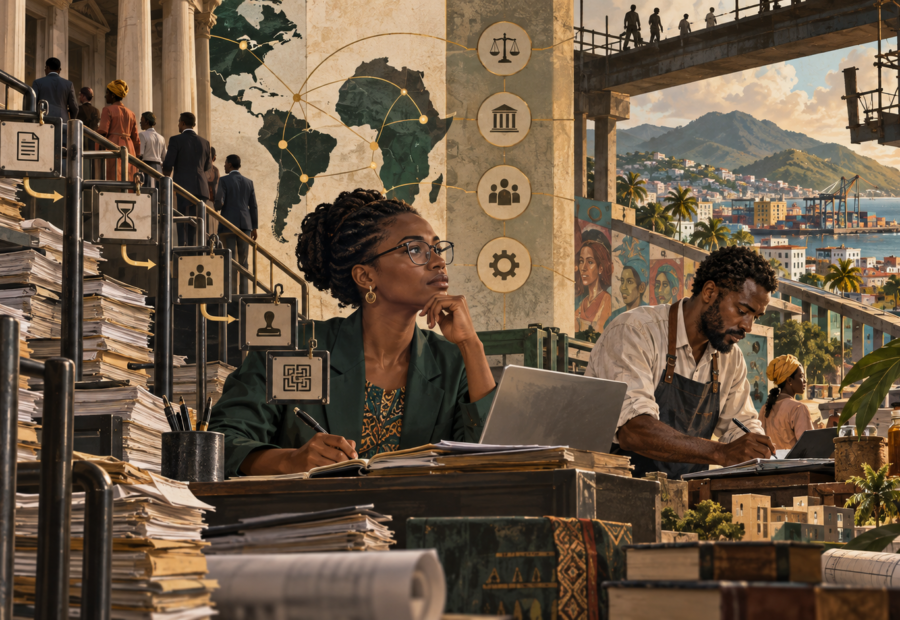
Every country carries knowledge. Some of it is formally recorded in books, archives, policies and research. Some of it lives in institutions, professional practices and systems developed over many years. Much of it, however, is held more quietly.
It lives in the memories of elders, the instincts of farmers, the hands of artisans, the routines of families, the experience of workers and the ways communities respond when formal systems are unable to meet every need. This knowledge may be so familiar that we no longer recognise it as knowledge. It may simply be described as the way things are done.
Yet something understood in one country may offer a new possibility to another. A practice developed on a small island may help a coastal community elsewhere prepare for environmental change. A system of community care may offer lessons to countries struggling with isolation and ageing populations. An entrepreneur who has learned to build with limited resources may understand something that cannot be found in a conventional business textbook.
A public institution that has survived repeated political and economic change may also carry valuable lessons about continuity, adaptation and institutional memory. Every country has problems, but every country has also learned something.
The question at the centre of Sankofa is:
What wisdom would your country contribute to the Global South?
More Than a National Achievement
When we speak about what a country can contribute, it is easy to think first about its most visible achievements. We may think about a successful industry, a technological development, a celebrated leader or an internationally recognised policy.
These achievements matter, but wisdom is not always found in the most prominent places. It may live in a practice that has never been named. It may be found in how people organise after a storm, share responsibility for children, preserve food, resolve conflict, support a neighbour or maintain their cultural identity after migration.
It may also be held by people who are rarely invited to speak for their country. The most valuable contribution may not come from a minister, academic or recognised expert. It may come from a fisher who understands the changing sea, a nurse who has learned how to deliver care when supplies are limited or a market vendor who understands trust, negotiation and the rhythms of a local economy.
It may come from a craftsperson preserving knowledge that has passed through several generations. It may come from a public officer who has watched policies come and go and understands why some reforms survive while others disappear.
A country’s wisdom is larger than its official story.
What Has Experience Taught Us?
Wisdom is not simply information. It is knowledge shaped by experience, reflection and consequence. It is what people understand after living through something, trying to respond and observing what happens next.
Countries across the Global South have lived through colonisation, enslavement, occupation, political upheaval, economic adjustment, migration, natural disasters and rapid social change. These experiences have created wounds and inequalities that should not be romanticised, but they have also forced people and institutions to adapt.
Communities have developed ways of surviving uncertainty, maintaining relationships, creating livelihoods and preserving identity under difficult conditions. That knowledge deserves attention.
The question is not whether hardship is good for people. It is not. The question is whether the lessons developed through hardship might help others facing similar conditions.
What has your country learned that it should not have had to learn, but now understands deeply?
What Might Grenada Contribute?
I ask this question first from Grenada.
Grenada is a small island state. Its population, economy and institutional resources are limited when compared with those of larger countries. It would be easy to begin with what Grenada lacks, but smallness creates its own forms of knowledge.
In a small society, relationships matter. People are rarely separated by many degrees. Personal, professional, political and family networks overlap. Reputation travels quickly, and decisions made within an institution can affect relationships far beyond it.
This can create difficulties. It can complicate accountability, confidentiality and impartial decision-making. But it can also teach us something about interdependence. Small societies understand that no person, business or institution functions entirely alone.
Grenada also knows something about living with vulnerability. Hurricanes, climate change, international market shifts, migration and decisions made by larger countries can have immediate effects on everyday life. A small country cannot always control the forces affecting it. It must learn to prepare, adapt, rebuild and maintain relationships beyond its borders.
We know something about making limited resources stretch and about informal systems filling gaps left by formal ones. We understand diaspora relationships and the ways people continue contributing to home after leaving it. We also know something about preserving identity while remaining open to the world.
But we know that resilience can become an unfair expectation. Communities should not be praised endlessly for surviving conditions that could have been prevented or better managed. The language of resilience can sometimes hide the need for stronger systems, fairer policies and greater accountability.
Perhaps one piece of Grenadian wisdom is that people can adapt remarkably, but their ability to cope should never become an excuse for institutions to remain weak.
Your Country May Know Something Different
A country’s contribution will be shaped by its geography, history, culture and experience. A country affected by drought may carry knowledge about water, conservation and the use of scarce resources. A country with many languages may understand negotiation, translation and living with different identities.
A society shaped by migration may know how belonging is maintained across distance. A country with a large informal economy may understand enterprise and economic survival beyond formal employment. A nation recovering from conflict may carry difficult lessons about peace, memory, justice and rebuilding trust.
An Indigenous community may hold generations of knowledge about land, biodiversity and environmental stewardship. UNESCO recognises that Indigenous and local knowledge can make important contributions to areas such as sustainable resource management, biodiversity conservation, water management and natural-risk prevention. (UNESCO on Indigenous and local knowledge)
An island may understand that climate change is not a distant theory but a present condition affecting coastlines, food, infrastructure and the possibility of remaining at home. A country with a young population may understand aspiration, frustration and the pressure to create opportunities quickly. A country with an ageing population may understand the importance of care, social connection and preserving knowledge between generations.
No experience automatically produces wisdom. Wisdom emerges when experience is examined.
Who Gets to Answer for a Country?
No single person can speak for an entire country. A government may offer one answer, while an academic may offer another. A rural community, business owner, artist, young person or member of the diaspora may see the country differently. Their answers may even contradict one another.
That is not a problem to be eliminated. It is part of the value of asking the question.
Countries are not single stories. The knowledge held in a capital city may differ from what is understood in a village. The experience of someone with wealth and influence may differ from that of someone trying to survive at the margins. The national story celebrated abroad may not reflect what citizens experience at home.
When we ask what wisdom a country can contribute, we must also ask whose wisdom has been recognised and whose knowledge has been ignored. Who is permitted to represent the country? Who has been written out of its official story? What might become visible if we listened beyond the usual voices?
Wisdom Must Be Examined
To say that every country carries wisdom is not to say that every inherited belief or practice is valuable. Countries also carry prejudice, inequality, harmful traditions and distorted versions of their histories.
Some practices survive not because they are wise, but because they protect power. Some ideas are described as cultural when they are being used to prevent necessary change. Some national stories celebrate resilience while hiding the people who paid the highest price for it.
Sankofa does not ask us to retrieve everything. The Sankofa bird returns for the egg, something valuable, fragile and capable of contributing to what comes next. Discernment is part of the philosophy.
We must ask whether the knowledge we carry still serves us. Who benefits from it, and who is harmed by it? Does it help people live with greater dignity? Can it be adapted? Does it belong to a particular context, or could it offer something more widely?
Wisdom should not be accepted merely because it is old or local. It should be respected enough to be examined seriously.
Contribution Is Not Competition
This question does not ask countries to compete over which possesses the greatest wisdom. It is not another ranking, nor does it assume that a country has one special lesson that no other society has discovered. Several countries may arrive at similar knowledge through very different experiences.
The purpose is contribution. What can we place into a shared conversation? What can we offer honestly, including the limitations and failures that shaped what we learned? What can others examine, question and adapt?
South-South cooperation is built on this principle of exchange. The United Nations describes it as countries of the South pursuing shared development goals through the exchange of knowledge, skills, resources and technical experience. It can involve governments, civil society, universities, businesses and regional organisations. (United Nations Office for South-South Cooperation)
But the spirit of exchange can begin before a formal programme exists. It can begin with a conversation.
The Lessons Found in Failure
Countries often prefer to share their successes. Successful programmes attract attention, funding and invitations, while failures are hidden, renamed or forgotten.
But some of the most valuable contributions a country can make come from what did not work. Why did a reform fail? Why did a promising programme disappear when leadership changed? Why did communities reject a policy that appeared sensible on paper? Why did an imported system fail to become rooted? What warning signs were ignored, and what would the people involved do differently now?
A country that speaks honestly about failure may save another from repeating it. This requires humility, but it also requires institutions capable of remembering.
When every administration starts again, lessons disappear. When records are inaccessible, staff leave without transferring their knowledge or difficult experiences are removed from official accounts, countries lose the ability to learn from themselves.
Wisdom is not only what we know. It is also what we refuse to forget.
A Question That Can Travel
I intend to carry this question into conversations across the Global South:
What wisdom would your country contribute to the Global South?
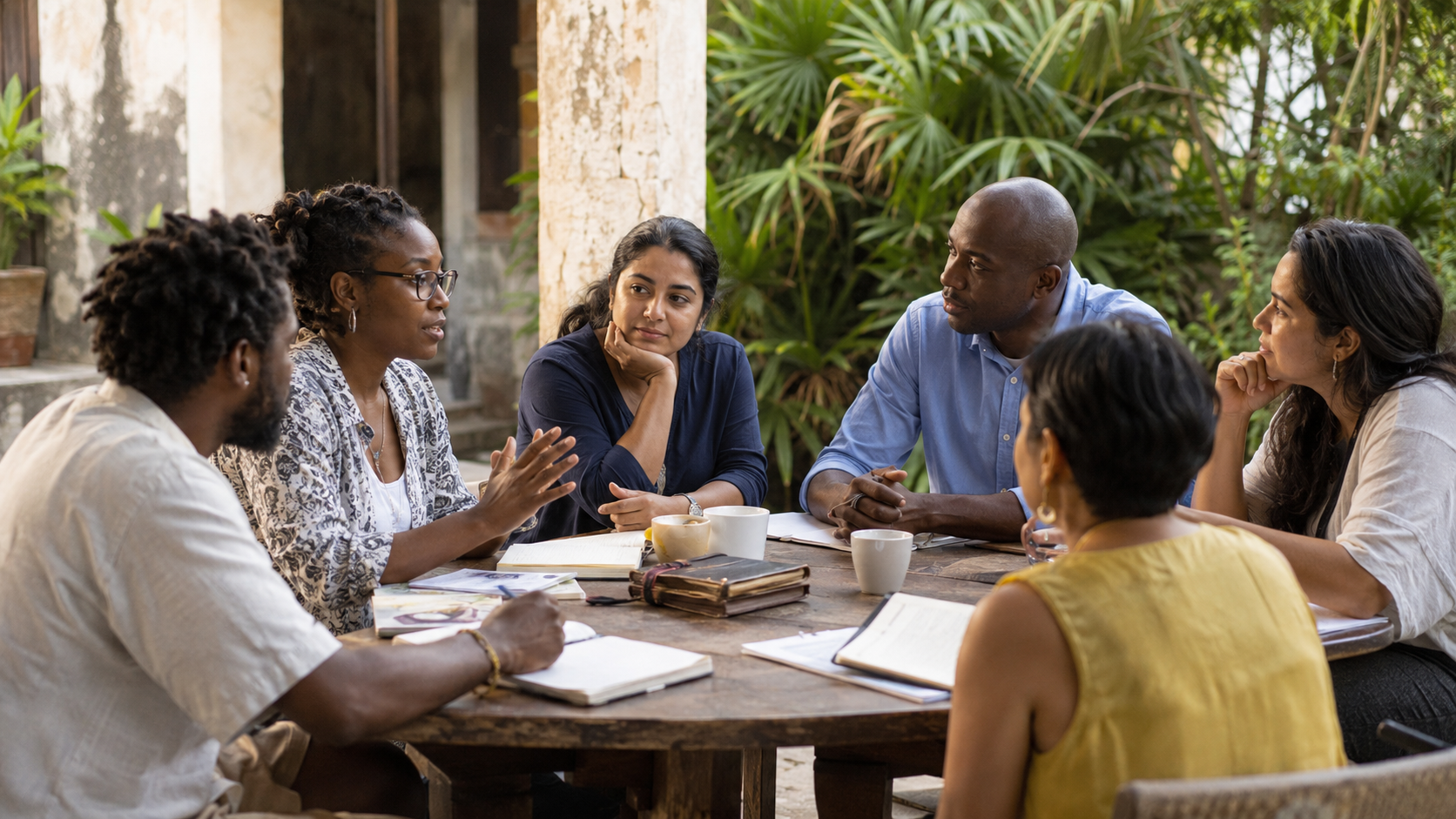
I want to ask it of leaders, students, researchers, artisans, public officers, entrepreneurs, elders and young people. I want to ask people working within major institutions as well as those whose knowledge has never been formally recognised.
I expect the answers to differ. Some people may describe a national practice, while others may tell a personal story. Some may speak about what their country has done well, while others may offer a lesson learned through failure. Some may challenge the question itself, and that too is part of the conversation.
The purpose is not to collect polished statements of national pride. It is to listen for knowledge.
Why This Matters to Sankofa
Sankofa is built around memory, meaning and becoming. Memory asks what has shaped us. Meaning asks what we understand from it. Becoming asks what we will carry into the future.
The central question of this project holds all three. It asks countries and communities to consider their experiences not only as a record of what happened, but also as a possible source of contribution. It asks us to recognise what we know before approaching the future as though we are empty.
It also asks us to listen across borders. A lesson from Ghana may find new meaning in Grenada. An experience from the Caribbean may speak to a community in the Pacific. An approach developed in India may open a possibility in Africa, while a question raised in China may lead to reflection in Latin America.
The aim is not to move knowledge from one place and reproduce it unchanged in another. It is to create encounters in which people can compare, question and adapt what they learn. It is to recognise that people living under different conditions may still have something meaningful to offer one another.
The United Nations Office for South-South Cooperation describes knowledge exchange as a central part of cooperation among developing countries. It supports platforms through which Southern partners can share solutions, research and opportunities for collaboration. (UNOSSC Knowledge Co-creation and Management)
Sankofa approaches that idea at a more human scale, through one person, one place, one experience and one question at a time.
What Would Your Answer Be?
Perhaps your country understands how to remain culturally distinct while engaging with the world. Perhaps it has developed a strong tradition of community organising, or its people know how to rebuild after disaster.
Perhaps it carries valuable knowledge about food, land, healing, education, enterprise, family, leadership or care. Its most important lesson may come from a national failure that should not be repeated elsewhere. The wisdom may even be something the country has not fully recognised yet.
You may not feel able to answer for your entire country, but you can answer from the part of it you know best. That may be your community, profession, family, generation or personal experience.
No single answer will be complete. Together, however, the answers may help us see the Global South differently. Not only as a collection of countries facing problems or a region waiting for assistance, investment or expertise, but as a vast and varied source of knowledge from which questions, ideas and possibilities can travel.
So I leave the question with you:
What wisdom would your country contribute to the Global South, and who else needs to hear it?