The phrase Global South appears increasingly in conversations about politics, trade, climate change, culture and international development. It is also central to Sankofa’s vision of creating stronger connections among people and communities across Africa, the Caribbean, Latin America and Asia.
But what does the term actually mean?
At first, it may sound like a simple geographical description. We might assume that the Global South refers to countries located in the southern half of the world, but it does not.
Australia and New Zealand are geographically in the Southern Hemisphere, yet they are generally considered part of the Global North. India, much of Africa and several Caribbean countries are located partly or entirely north of the equator, but they are usually included in discussions about the Global South.
The term is therefore less about where a country appears on a map and more about its place within the world’s political, economic and historical systems. Scholars often use it to describe countries and communities whose experiences have been shaped by colonialism, unequal economic relationships and exclusion from many of the institutions where global decisions are made.
Where Did the Term Come From?
For many years, countries were commonly divided into groups such as the First World, Second World and Third World. These descriptions became popular during the Cold War.
The First World generally referred to the United States and its allies, while the Second World referred to the Soviet Union and other communist states. The Third World referred to countries that were formally aligned with neither group.
Many of these so-called Third World countries had recently gained independence from European colonial rule. They were seeking their own political direction while also dealing with economies, borders and institutions shaped by colonialism.
Over time, the term “Third World” took on a different and often insulting meaning. Instead of describing political alignment, it became associated with poverty, disorder and backwardness. It reduced hundreds of different countries, cultures and histories to a single negative label.
The phrase Global South offered another way of discussing these countries and some of their shared experiences. American political activist Carl Oglesby is widely credited with using the term “Global South” in 1969 while writing about the Vietnam War and the political and economic dominance of powerful Northern countries.
The language of North and South became more widely recognised during the 1970s and 1980s as countries across Africa, Asia, Latin America and the Caribbean called for a fairer international economic system.
In 1980, a commission led by former West German Chancellor Willy Brandt published North–South: A Programme for Survival, a major report on international inequality. The report helped popularise the idea of a broad divide between the wealthier industrialised countries of the North and the poorer or less industrialised countries of the South. A map associated with the report became known as the Brandt Line.
The line was never a perfect boundary. It did, however, help people see that much of the world’s wealth, influence and decision-making power was concentrated within a relatively small group of countries.
Who Is Included in the Global South?
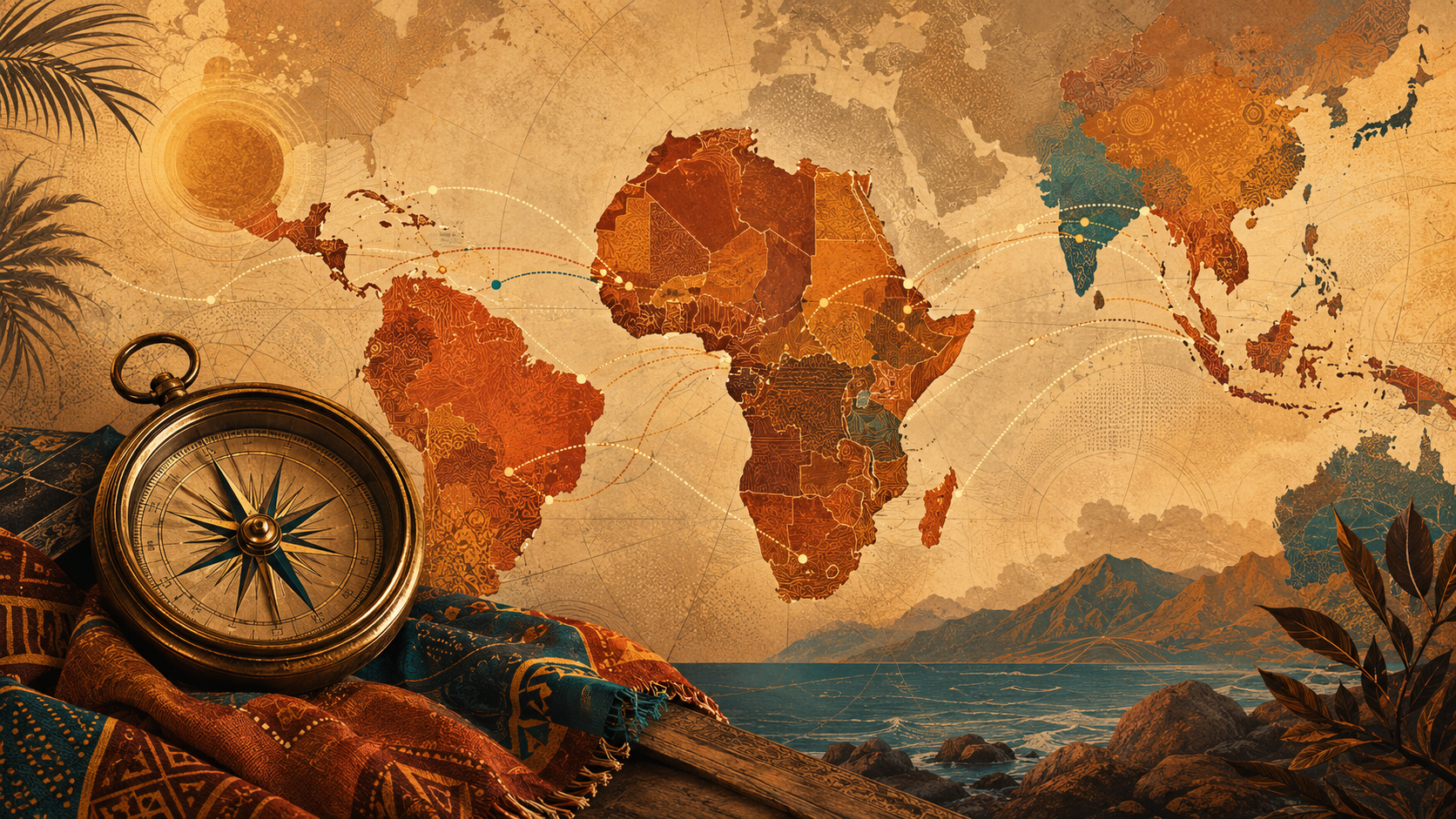
There is no single official list accepted by everyone. Generally, the term is used to include countries across Africa, Latin America and the Caribbean, much of Asia, the Pacific Islands and parts of the Middle East.
Countries such as Grenada, Ghana, Kenya, Jamaica, Brazil, India, China, Indonesia, South Africa and Trinidad and Tobago may all be described as part of the Global South. But these countries are not the same.
China is one of the world’s largest economies, while Grenada is a small island developing state. Brazil has a population of more than 200 million people, while some Pacific nations have populations smaller than many individual towns.
Countries within the Global South have different languages, religions, political systems, histories, resources and levels of wealth. The term does not mean that every country has the same circumstances. It points instead to certain historical experiences and continuing patterns of global inequality.
Many countries of the Global South have experienced some combination of colonisation, slavery, foreign occupation, extraction of natural resources, unequal trading relationships, debt, outside political interference and limited influence within international institutions.
These histories continue to affect the present. They influence who controls international finance, whose knowledge is treated as authoritative, where products are manufactured, who owns natural resources, whose passports permit easy movement and which countries have the greatest influence over global decisions.
The Global South Is Not Another Word for Poor
It is important not to use “Global South” as a polite replacement for the word “poor.”
There is significant wealth within the Global South. There are powerful governments, successful companies, major universities, advanced technologies and rapidly growing economies. There are also serious inequalities within these countries.
A wealthy business owner in Lagos, Mumbai or São Paulo may have more in common economically with a wealthy person in London than with someone living in poverty in the same city. At the same time, poverty, exclusion and marginalisation also exist within countries described as part of the Global North.
This is why the Global South can sometimes be understood as more than a collection of countries. It can also refer to people and communities who live with the effects of unequal power, even when they are geographically located within wealthy Northern states.
Some scholars describe this by saying that there are Souths within the North and Norths within the South. The global divide does not exist only between countries. It can also be seen within them.
The term is most useful when it helps us examine relationships of power, not when it becomes another label placed on people.
Why Does the Idea Matter?
The idea of the Global South gives countries and communities a way to recognise that many of their challenges are connected.
A Caribbean country facing increasingly destructive hurricanes may have much to discuss with a Pacific island threatened by rising sea levels. An African country trying to protect traditional knowledge may find common ground with an Indigenous community in Latin America.
A small business in Grenada may learn from approaches developed in Ghana, Indonesia or Barbados rather than assuming that every solution must come from Europe or North America.
These relationships are often described as South-South cooperation. The United Nations describes South-South cooperation as collaboration among countries of the South through which governments, organisations, businesses, researchers and communities can share knowledge, skills, resources and successful approaches.
This cooperation may include areas such as agriculture, health, education, human rights, climate change, technology and economic development.
The principle is not that the South has nothing to learn from the North. It is that knowledge should not be understood as moving in only one direction.
Countries and communities across the Global South have always produced ideas, technologies, systems of care, forms of resistance, creative traditions and ways of understanding the world. Much of this knowledge has been overlooked, extracted or presented as less valuable than knowledge produced elsewhere.
Recognising the Global South therefore also requires us to ask who is treated as the expert, who gets to tell the story and whose solutions receive funding. We must ask whose history is remembered, whose knowledge is studied and whose knowledge is dismissed as informal or unscientific.
A Term That Must Be Used Carefully
The Global South is useful, but it is not perfect.
Grouping most of Africa, Asia, Latin America, the Caribbean and the Pacific under one name can hide enormous differences. It can make it seem as though billions of people share one identity, political position or vision of the future. They do not.
Governments within the Global South can also exploit their own people, contribute to inequality and pursue interests that harm smaller or less powerful countries. Simply belonging to the Global South does not automatically make a country fair, cooperative or progressive.
The term should therefore be the beginning of a conversation, not the end of one. It gives us a broad framework, but we must still pay attention to individual countries, communities and histories.
Why This Matters to Sankofa
For Sankofa, the Global South is not merely a category used by academics, governments or international organisations. It is a starting point for relationships.
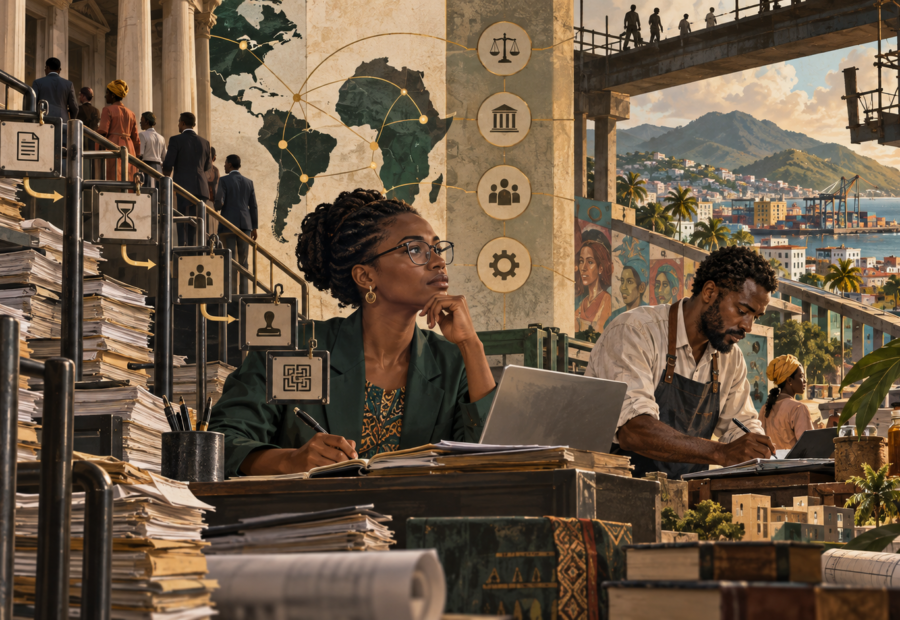
Sankofa is interested in what becomes possible when people across Africa, the Caribbean, Asia, Latin America and the wider South encounter one another directly. These encounters can happen not only through diplomatic meetings, development reports or international conferences, but also through conversations about work, memory, culture, leadership, enterprise, migration, creativity, community and everyday life.
Too often, our countries have been encouraged to look primarily towards former colonial centres for knowledge, approval, investment and opportunity.
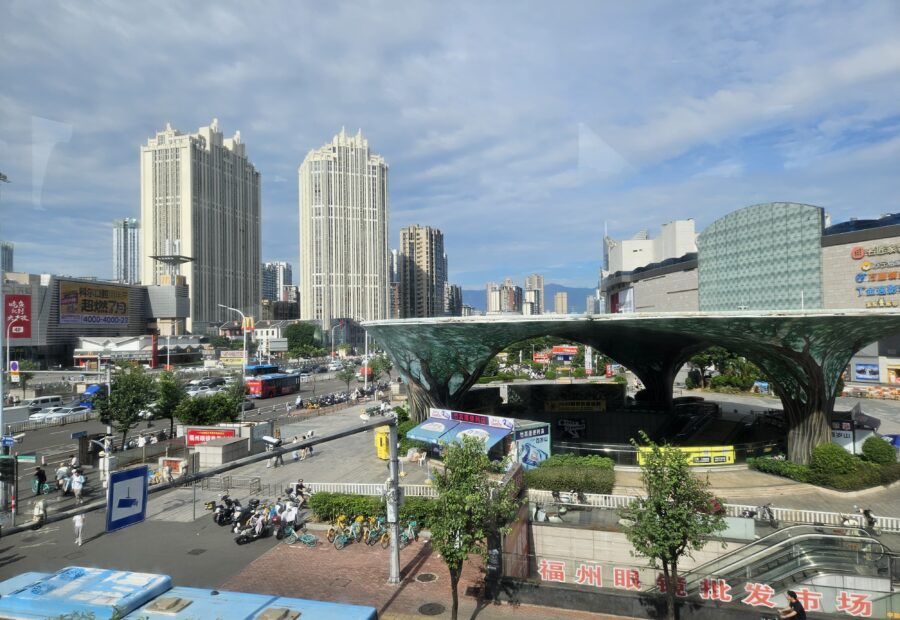
A Caribbean professional may be familiar with ideas coming from London, Toronto or New York, yet know very little about approaches being developed in Accra, Kigali, Nairobi, Jakarta or Fuzhou. An African entrepreneur may know more about European and American markets than about the needs, innovations and possibilities emerging across the Caribbean.
An Asian researcher may encounter the Caribbean mainly through tourism, music or headlines rather than through sustained conversation with the people who live and work here.
Sankofa wants to help narrow some of those distances.
The purpose is not to romanticise the Global South or pretend that all Southern countries share the same interests. Nor is it to reject every idea or institution associated with the Global North.
The purpose is to create more room for our countries and communities to see one another, to ask what we know and to consider what we have carried forward. It is an opportunity to exchange experiences without assuming that one side must always be the teacher while the other remains the student.
This is particularly important for small countries such as Grenada. Small states are often discussed in terms of what they lack, including size, resources, bargaining power, finance and technical capacity. Yet small countries also possess knowledge about adaptation, community, survival, migration, cultural continuity and making limited resources stretch.
That knowledge has value.
The same is true across the Global South. Communities that have endured colonialism, political upheaval, economic pressure, environmental vulnerability and rapid social change have developed ways of thinking and responding that deserve to be part of global conversations.
The question Sankofa asks is not simply what the Global South needs. It also asks what the Global South knows.
What wisdom might Grenada contribute to Ghana? What might Jamaica learn from Kenya? What could Barbados and Rwanda discuss about development, identity and nation-building?
What connections might emerge between Fuzhou and Port of Spain, Accra and St. George’s, Kigali and Kingston, or Nairobi and Bridgetown?
These are not abstract questions for Sankofa. They sit at the heart of what it is becoming.
What the Global South Can Become
The Global South is not only a description of past suffering or present disadvantage. It can also describe possibility.
It can represent countries learning directly from one another and communities building relationships beyond old colonial routes. It can create space for researchers to treat local knowledge seriously, artists to find one another across oceans and small states to speak collectively.
It can also allow practitioners to share what has worked, what has failed and what they are still trying to understand.
For Sankofa, the Global South is not a single place and certainly not a single story. It is a wide and complicated network of people shaped by memory, movement, struggle, creativity and becoming.
Our purpose is not to pretend that we are all the same. It is to become more curious about what we carry, what we have survived, what we have created and what we might learn from one another.
The Global South is not simply the part of the world that has been left behind. It is also a place from which new ways of seeing, building, remembering and belonging can emerge.